QR-bills in Switzerland: everything you need to know to issue them correctly
In the digitalisation of payments in Switzerland, the QR-bill is one of the most important changes of recent years. Officially announced by the Swiss financial sector, the QR-bill is set to gradually replace the current red and orange payment slips (ESR/ISR), introducing a single, modern, digital standard.
In 2020 it is not yet compulsory, but businesses are strongly encouraged to prepare in good time by adapting their invoicing systems.
What is the QR-bill?
In the digitalisation of payments in Switzerland, the QR-bill is one of the most important changes of recent years. Officially announced by the Swiss financial sector, the QR-bill is set to gradually replace the current red and orange payment slips (ESR/ISR), introducing a single, modern, digital standard.
In 2020 it is not yet compulsory, but businesses are strongly encouraged to prepare in good time by adapting their invoicing systems.
Why is Switzerland introducing QR-bills?
The current payment slip system is fragmented and based on several formats. By introducing the QR-bill, Switzerland aims to:
- do away with the distinction between red and orange slips
- standardise payment processes
- encourage digitalisation
- align with the international ISO 20022 standards
For businesses, this means less complexity and more efficient administration in the medium term.
When will the new system come into force?
In February 2020 the QR-bill has already been officially presented, but:
- it is not yet compulsory
- it will exist alongside the traditional payment slips for a transitional period
- invoicing and accounting software needs to be adapted
The authorities and financial institutions recommend that businesses start the transition now, to avoid technical or operational problems later
How will QR-bills work?
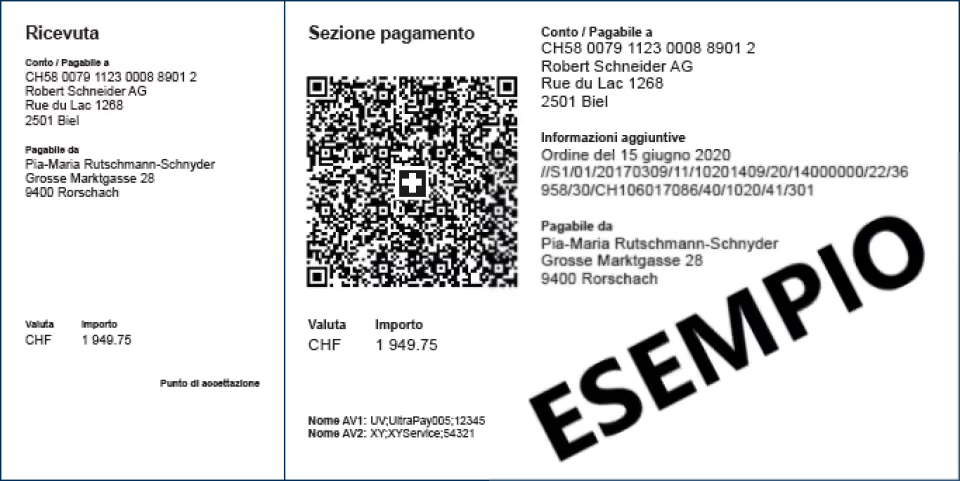
A QR-bill will consist of:
- a standard information section (header, amount, due date)
- a standardised payment part
- a QR code that can be read both digitally and on paper
The customer will be able to:
- scan the QR code with a smartphone
- import the bill into their e-banking
- pay over the counter as today, during the transitional phase
The different types of QR-bill
Several formats are planned, to cover every business need:
- QR-bill without reference
Similar to the current red slip. - QR-bill with QR reference (QRR)
Designed for businesses that need automatic payment reconciliation, as happens today with the ISR. - QR-bill with SCOR reference
Based on international standards and suitable for more complex situations too.
What does it mean for Swiss SMEs?
For many SMEs, the QR-bill is a great opportunity to modernise, but also a technical challenge if they use outdated systems.
The main expected benefits are:
- fewer payment errors
- faster collection of payments
- better accounting automation
- less manual work
- greater compatibility with modern software
Those who prepare in advance will be able to handle the change without stress and without disruption to their operations.
How to prepare in 2020
Even though QR-bills are not yet compulsory, businesses can already:
- check whether their invoicing software supports the QR-bill
- plan the update of their accounting systems
- ask their bank about the QR-IBAN
- train their administrative staff
Tackling the change in good time means avoiding unexpected costs when the new standard becomes final.
How easy4you can help
easy4you supports Swiss SMEs in the transition to the QR-bill, taking care of:
- analysing existing systems
- adapting invoicing software
- integration with accounting
- administrative and digital advice
Our aim is to make this step simple, secure and free of disruption for your business.
Conclusion
The QR-bill is the future of payments in Switzerland. Although it is not yet compulsory in 2020, it is clear that it will become the single standard in the coming years. Preparing today means saving time, money and trouble tomorrow.
Would you like to know whether your company is ready for the QR-bill?
Get in touch for a free consultation.
Why was it introduced?
The QR-bill was introduced to standardise and modernise the payment system in Switzerland.
Thanks to the QR code, all the information needed to make a payment is contained automatically, making transactions more efficient.
The payment part with QR code and receipt of the QR-bill replaces the traditional red and orange payment slip (PVR), which will only be available until 30 September 2022.
How long can I use the old slips?
From 1 October 2022, PV and PVR slips can no longer be used to make payments, as they can no longer be processed online or at the post office.
What should I do if I still receive the old slips after 30 September?
After 30 September 2022 you will no longer be able to use the red and orange slips.
If your bill does not include a payment part with a QR code, contact the issuer responsible for the QR-bill.