Food delivery – Delivery platform vs own rider: which strategy should you use?
Getting into the takeaway business is an appealing idea, especially given the growing demand for food delivered to the door. But when it comes to choosing how to handle deliveries, many restaurateurs face a key question: is it better to rely on delivery platforms such as Divoora, Smood or e-need, or is it more worthwhile to have your own rider?
Here we compare the pros and cons of the two options, looking at which strategy can work best for anyone wanting to open a takeaway business. If you’re planning to launch into the food delivery business, reading this information will help you make the right decision for your restaurant.
Delivery platforms: immediate visibility, but at a high price
Delivery platforms are undoubtedly a powerful tool for reaching a large customer base quickly. They can provide immediate visibility and access to millions of users ready to place an order. However, using these services comes with a range of costs and penalties that are important to know about.
Pros of delivery platforms:
- Visibility and order volume: platforms such as Divoora, Smood and e-need already have an established customer base, which means that, from day one, you can count on a certain amount of orders. This lets you test the market and quickly check whether there’s interest in what you offer.
- Simplified logistics: you won’t have to worry about the operational side of deliveries, such as managing riders, routes and timings. The platforms take care of this for you.
- Flexibility: you can choose when to work without having to hire full-time staff.
Cons of delivery platforms:
- High commissions: platforms keep a significant percentage (up to 30%) of every order. This can noticeably reduce profit margins, especially if order volume isn’t very high.
- Penalties for delays: if a rider is late with a delivery, they can be penalised, and sometimes these penalties are charged to the restaurant too, further reducing earnings.
- Set-up and management costs: there’s often a fee to pay to list the restaurant on the platform, as well as costs for listing products, which can become expensive over the long run.
Your own rider: full control and higher margins, but more responsibility
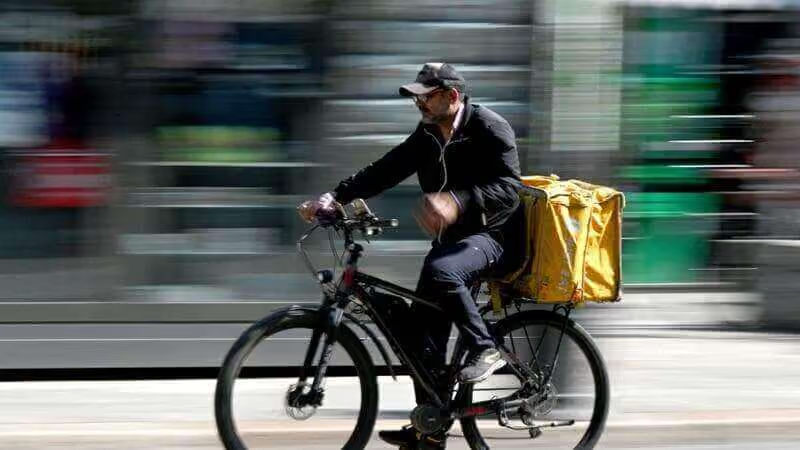
If order volume grows and the restaurant is able to manage deliveries independently, switching to your own rider can prove far more worthwhile. With an in-house rider, platform commissions are eliminated, allowing you to keep a larger share of the earnings.
Pros of having your own rider:
- Higher earnings: not having to pay platform commissions means you can keep a larger percentage of the earnings on every order. This can make a big difference to profit margins, especially if order volume is high.
- Direct control over quality: having direct control over deliveries lets you make sure timings are met and the service is always up to standard. No penalties for delays or mistakes, and no intermediary that could harm the customer experience.
- Customer loyalty: by managing deliveries directly, you can further personalise the customer experience, building a closer relationship and perhaps offering special promotions or perks for those who order directly.
Cons of having your own rider:
- Initial costs and organisation: hiring and managing riders, as well as sourcing vehicles and insurance, can represent a significant initial investment. You’ll also need to plan delivery logistics carefully, which takes time and resources.
- Logistics management: unlike platforms, which handle deliveries for you, with your own rider you’ll need to manage routes, delivery times and staff availability, which could complicate things, especially during peak hours.
- Risk of lower visibility: initially, without a delivery platform bringing in customers, it could be harder to become known, and you may need to invest in marketing to grow your customer base.
The winning strategy: start with a platform and move to your own rider
An interesting strategy, especially for those starting a takeaway business, could be to begin with a delivery platform and then move to your own rider once order volume becomes more stable. This way, you can make the most of the immediate visibility offered by Divoora, Smood and e-need, test the market and assess your audience without too much initial risk. Once you’ve built up a good flow of orders and a customer base, you can make the switch to an in-house rider to increase your profit margins and improve control over the delivery service.
Conclusions
There’s no one-size-fits-all solution for every restaurant: the choice between a delivery platform and your own rider depends on several factors, including order volume, the type of restaurant, and the resources available. Starting out with delivery platforms can be a good option for those who want to launch quickly and test the market, while switching to your own rider can bring significant benefits in terms of earnings and control over the service. The smartest strategy might be to combine both methods, starting with the platform to gain visibility and then moving to an in-house rider to increase profits and improve the customer experience.