Administrative outsourcing: cutting costs or working more efficiently?

A few weeks ago, an SME owner asked us whether outsourcing his administration would save him money. We answered with another question: how much does keeping it in-house cost him today, every month?
He had never worked it out. This is true of most SME owners in Ticino: administration handled internally has a real cost, in hours of work, but it stays invisible because it never appears as a separate item in any set of accounts.
The cost that appears in no set of accounts
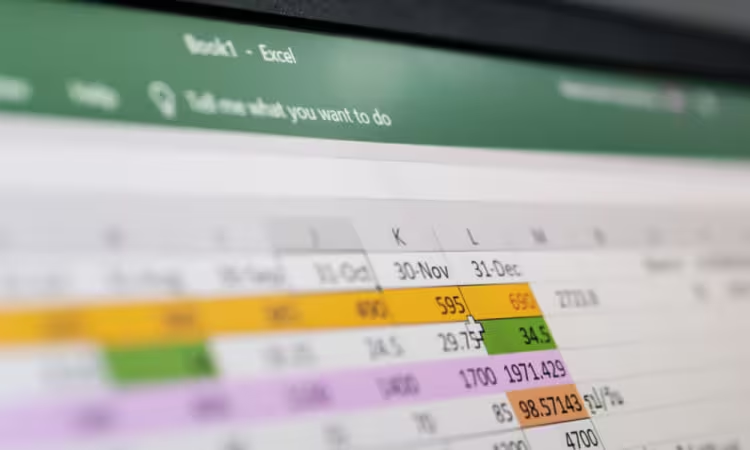
People who handle administration internally rarely work out how much time they actually spend on it. Invoices to issue, deadlines to check, documents to file, reminders to send: these tasks add up in small blocks of time scattered across the week, and they are hard to see as a real cost.
We also talked about this in the article how much time do you lose on administration every month?: when you add it up properly, hour by hour, the total is almost always higher than expected.
Savings or efficiency: two different questions
Many people approach administrative outsourcing by asking only whether it costs less than an in-house employee. It is a fair question, but an incomplete one, because for an SME the biggest benefit often lies in the quality and consistency of the work rather than in the hourly cost itself.
An external professional who deals with administration every day makes fewer mistakes, meets deadlines more reliably and knows the latest regulations. These are skills that take years of continuous practice, and they are hard to keep up to date when administration is something squeezed in between other commitments.
When outsourcing pays off
Some signs suggest it is worth looking seriously at this option:
- you spend more hours than planned on invoices and documents, taking time away from customers or production;
- you have already had delays or mistakes with payments, tax deadlines or orders to suppliers;
- your business is growing, and the volume of paperwork is growing faster than your ability to handle it;
- you have no dedicated person in-house, and administration falls to someone who has other things to do.
If you recognise even two of these points, the time you think you are saving by keeping everything in-house is probably already costing you more than you think.
When it makes sense to stay as you are
Outsourcing is not the right answer for everyone at every stage. A business that has only just started, with very few accounting entries and a volume of documents that can be handled in a couple of hours a month, can still afford to manage everything internally, perhaps with the help of a simple invoicing tool. The time to consider a change comes when this balance breaks down, not before.
What you can outsource in practice
Administrative outsourcing is not a single package, the same for everyone. It can cover day-to-day bookkeeping, meaning recording invoices, bank reconciliation and keeping the books, or document management alone: filing, organising and being able to find invoices, contracts and receipts. It can include keeping track of deadlines and obligations, VAT and social contributions included, so you do not risk forgetting them between one commitment and the next, or handling outgoing and incoming invoices, with invoices issued to customers, checks on those received from suppliers and payment reminders.
Then there is the annual tax return, a particularly delicate moment that we covered in the article tax returns: how to get through the annual exercise without stress.
You can start with just one area, for example document management alone, and expand step by step, without having to hand everything over at once from day one.
The savings show at the end of the year
Comparing the monthly cost of an external service with the salary of an in-house employee is an incomplete comparison. You should also count the mistakes avoided, the deadlines met without late-payment charges or interest, the hours freed up for work that brings in revenue directly, and the peace of mind of knowing that someone with specific expertise is looking after the administration consistently.
We also wrote about this more broadly in the article smart outsourcing for Swiss SMEs: lower costs, more efficiency, which applies the same principle to other business functions as well.
How we do it
With our accounting and administration service we work to measure, starting from the company’s actual situation: sometimes it is enough to take over document management alone, other times we need to handle the whole administrative cycle, from invoices to the tax return.
If you want to know what managing your administration in-house actually costs you today, and whether it makes sense to change approach, contact us: we will go through the figures together.