Starting your own business made easy

Starting your own business is an exciting and thrilling experience. Before you begin, however, there’s a series of administrative and bureaucratic procedures to follow. Founders of new businesses have to make various visits to offices and authorities before they can get their business up and running. Here you’ll find an overview of the administrative tasks that young businesses need to deal with
Before starting your own business
The big question: part-time or full-time?
Many entrepreneurs choose to start out part-time to test the market and secure a degree of financial stability. If you go for this option and want to keep risk to a minimum, you won’t, for example, need to worry about occupational pension provision. But if you’ve decided to become self-employed full-time, there are many other things to consider
Should I pay into my pension fund or not?
Anyone who becomes self-employed is usually entitled to withdraw the pension fund assets accumulated up to that point. The amount can range from five to six figures, depending on length of service and income. This possibility can seem tempting, but it’s important not to jump to conclusions, to avoid financial problems later in life.
It’s worth bearing in mind that in certain cases, pension fund withdrawals can be taxed as income. It’s therefore essential to carefully consider whether you really need that money to start your business, or whether you can rely on other sources of financing. It’s advisable to consult experts on this point.
To withdraw pension fund assets, you need to prove your self-employed status to the pension fund with a detailed file. It’s recommended to do this only after registering with the commercial registry.
Accounting: hire a professional or handle it yourself?
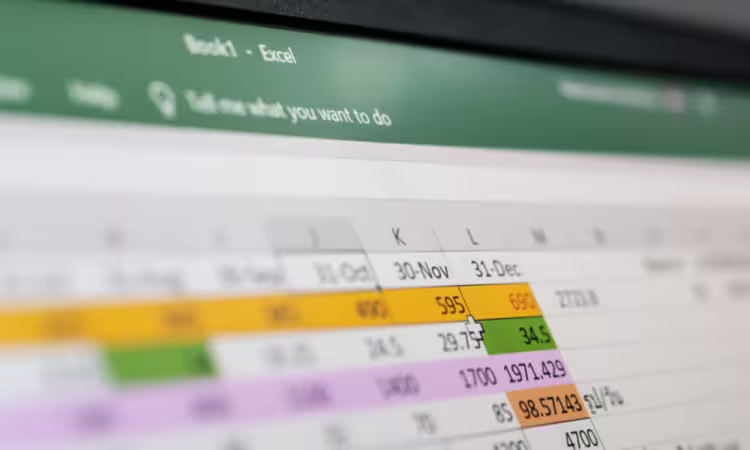
Spreadsheets, business software or a fiduciary?
When it comes to managing your accounts, you have plenty of options to choose from. The numerical requirements you need to meet depend on the legal structure you’ve chosen. Sole proprietorships with an annual turnover below CHF 500,000 usually need to keep accounts, while GmbHs and AGs must adopt a double-entry system. In any case, at least a simple record of income and expenses is required.
Today, small businesses are increasingly adopting cloud-based accounting software, which is flexible and relatively affordable. This means you always have control over your current financial situation and know immediately if there are any invoices still to be settled.
Tip: with us, your outgoings and income are automatically recorded in the right place, in line with the law. Find out more about our accounting services.
How to protect your brand or invention with patents
You’ve set up your business and developed an innovative product. Then you realise that someone is launching a copy of your product before you do. This kind of situation, which sounds like a nightmare, happens more often than you’d think. To fend off copycats, it’s advisable to protect your patent as early as possible. It’s equally important to check whether the brand or company name is already in use before starting your business: the commercial registry office doesn’t do this for you.
When setting up the company
Registering with the commercial registry: the foundations
Whether it’s a sole proprietorship, general partnership, GmbH or AG, registration with the commercial registry is mandatory. For sole proprietorships, registration is only mandatory for an annual turnover of CHF 100,000 or more. You can register easily at the cantonal commercial registry office. The cost ranges from CHF 200 to 300. Even if your sole proprietorship’s turnover is below CHF 100,000 a year, it’s still worth doing. Registering with the commercial registry makes it easier for customers to find you and boosts your credibility.
VAT: voluntary registration can be worthwhile
If you reach an annual turnover of at least CHF 100,000, you must register with the Federal Tax Administration (FTA) within 30 days of becoming liable for VAT. Even if your turnover is below CHF 100,000 a year, in some cases it can be worthwhile to register the business for VAT voluntarily. This means obtaining a VAT number and boosts your credibility with current and potential customers. This can be particularly beneficial in the services sector.
Tip: all previous input tax paid, for example on investments, will be refunded, but you need to be registered for VAT. Those making larger investments may be able to recover the VAT paid.
Social insurance: AHV, accident insurance or daily sickness benefits?
The rules on social insurance are clear: entrepreneurs are required to ensure social insurance cover for themselves and their employees. The type of insurance, whether voluntary or mandatory, depends on the legal form of business chosen. Sole traders must make sure they have adequate cover. However, AHV/IV/APG is mandatory in all cases. The self-employed must also independently take out insurance against occupational and non-occupational accidents. Daily sickness benefits insurance and unemployment insurance are optional. If you don’t have a pension fund, it’s worth looking into private pension options (pillar 3).
Stricter rules apply to GmbHs and AGs than to sole proprietorships. In this case, most social insurance is mandatory.
Sustainability and social commitment
Sustainability is crucial at this point in time. Taking on this challenge can bring major benefits, by incorporating environmental and social aspects to reduce your environmental footprint, using eco-friendly materials and promoting fair working conditions. It improves your company’s reputation and brings loyal customers. Starting with small, practical steps, such as using energy-efficient appliances and choosing sustainable suppliers, your business will position itself as a responsible, forward-looking player in the market.
After setting up the company
Taxes and the annual financial statement
When it comes to the tax aspects of setting up a company, it’s essential to distinguish between sole proprietorships and companies (GmbH or AG). For sole proprietorships, profits are taxed according to the owner’s personal tax rate and declared as income on their personal tax return. The basis for calculation is the company’s annual balance sheet. For GmbHs and AGs, profits are subject to corporate tax, and capital tax is paid on share capital. This means there’s a separate tax return for GmbHs and AGs.
Businesses must clearly distinguish personal expenses from business ones. Generally speaking, it’s permitted to deduct anything that is justified for business reasons, but receipts must be provided to support the expenses. Using our software, you can simply capture receipts via your mobile phone. The software automatically takes care of recording them correctly.
easy4you for new entrepreneurs
Fewer offices and more start-ups
Would you like to simplify the digitalisation of your administrative tasks with just a few clicks and get direct access to partner offers across various sectors?
Request a consultation now →.