E-commerce SEO audit: the complete guide to optimising your online shop
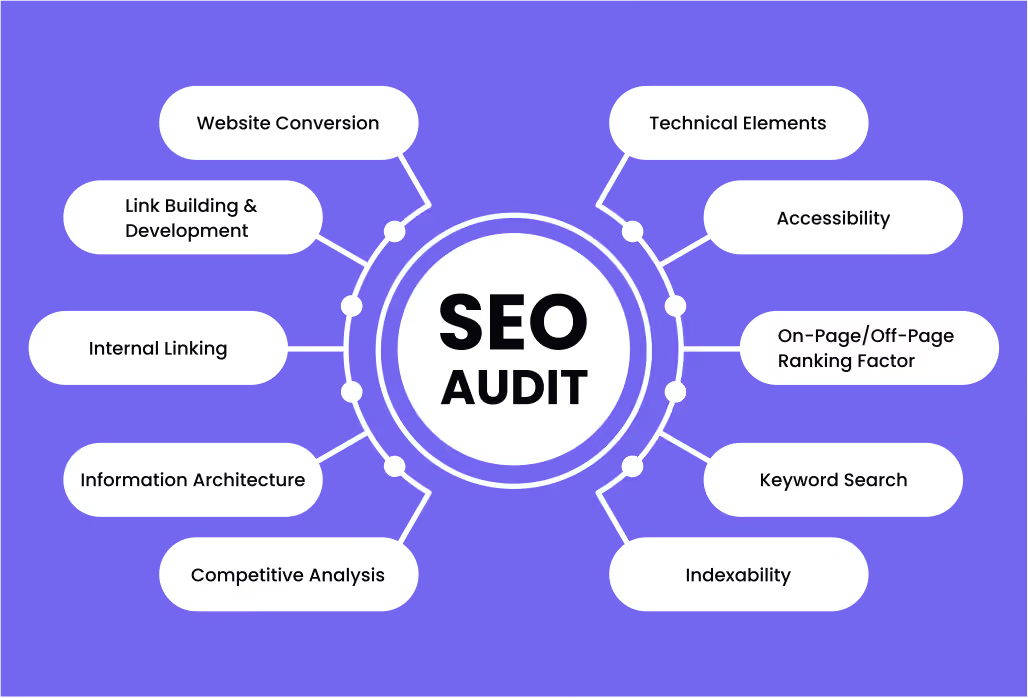
An SEO audit for your e-commerce site is essential to assess the health of your online shop and spot areas for improvement. Whether you run WooCommerce, Shopify, PrestaShop or Magento, a thorough audit helps increase your visibility on search engines, improve the user experience and boost sales.
Why run an SEO audit for an e-commerce site
In e-commerce, competition keeps growing, and good products count for little if customers cannot find them. An SEO audit lets you:
- Identify technical issues that slow down the site or prevent indexing.
- Optimise content and product pages to attract more visitors.
- Improve the site's internal structure and navigation.
- Analyse backlinks and link-building opportunities to strengthen the site's authority.
Technical analysis of the site
Basic analysis
The technical side is the foundation of every SEO audit. Some key aspects:
- Loading speed: slow sites increase the bounce rate.
- URL structure and redirects: readable URLs and correct 301 redirects avoid duplicate content.
- Mobile-friendly: the site must adapt to smartphones and tablets.
- Sitemap and robots.txt: essential for guiding search engines and flagging the important pages.
Recommended tools:
- Google PageSpeed Insights
- Screaming Frog / Sitebulb
- Google Search Console
Content review
Content is essential for attracting organic traffic and convincing customers to buy:
- Product pages: clear, unique copy optimised with relevant keywords. (see article)
- Meta tags: unique titles and descriptions for each page see article)
- H1/H2: clear headings that improve readability and SEO.
- Duplicate or thin content: avoid pages with little or duplicated text.
Useful tools:
- SEMrush and Ahrefs for keyword analysis and duplicate content checks.
- CMS-specific plugins: Yoast SEO (WooCommerce), SEO Manager (Shopify), PrestaShop SEO Expert, Mageplaza SEO (Magento).
On-page optimisation
On-page optimisation ensures that every page ranks well and is easy to navigate:
- Keywords assigned to each product.
- Image optimisation with descriptive alt text.
- Clear structuring of categories and filters to improve internal search.
Off-page SEO
Off-page SEO increases the site's authority and builds user trust:
- Quality backlinks: links from authoritative, relevant sites.
- Guest posts and collaborations: industry blogs or influencers.
- Active social presence: generates traffic and natural backlinks.
SEO audit for e-commerce platforms
Every CMS has dedicated tools:
- WooCommerce / WordPress: Yoast SEO, Rank Math.
- Shopify: SEO Manager
- PrestaShop: PrestaShop SEO
- Magento: Amasty SEO Toolkit.
These tools help identify issues, suggest optimisations and track how rankings evolve.
Planning corrective actions
An effective SEO audit does not just flag problems; it also sets out an action plan:
- Fix technical errors (404s, redirects, sitemap).
- Optimise copy, titles, meta descriptions and images.
- Improve internal structure and internal links.
- Monitor keywords, traffic and conversions to adjust the strategy.
Conclusion
A comprehensive SEO audit turns an e-commerce site into an effective, visible sales tool. With technical analysis, optimised content, on-page and off-page SEO, and tools dedicated to WooCommerce, Shopify, PrestaShop or Magento, every online shop can grow sustainably, winning more customers and increasing sales.
Contact us for your e-commerce SEO audit
Don't let your e-commerce site miss out on valuable opportunities. With a thorough SEO audit, we can identify every weak point on your site and set out a tailored action plan to improve visibility, traffic and conversions.
Get in touch if you'd like an SEO audit for your online shop.