Why we analyse first and propose afterwards
It happens often: a business contacts a provider for a website, management software or digital consultancy, and within a few days it already receives a quote with a ready-made solution.
It looks efficient. In reality, more often than not, it's a warning sign.
A solution proposed before truly understanding how the business works, what its processes, constraints and goals are, is not a tailored solution. It's a standard product, presented as if it were one.
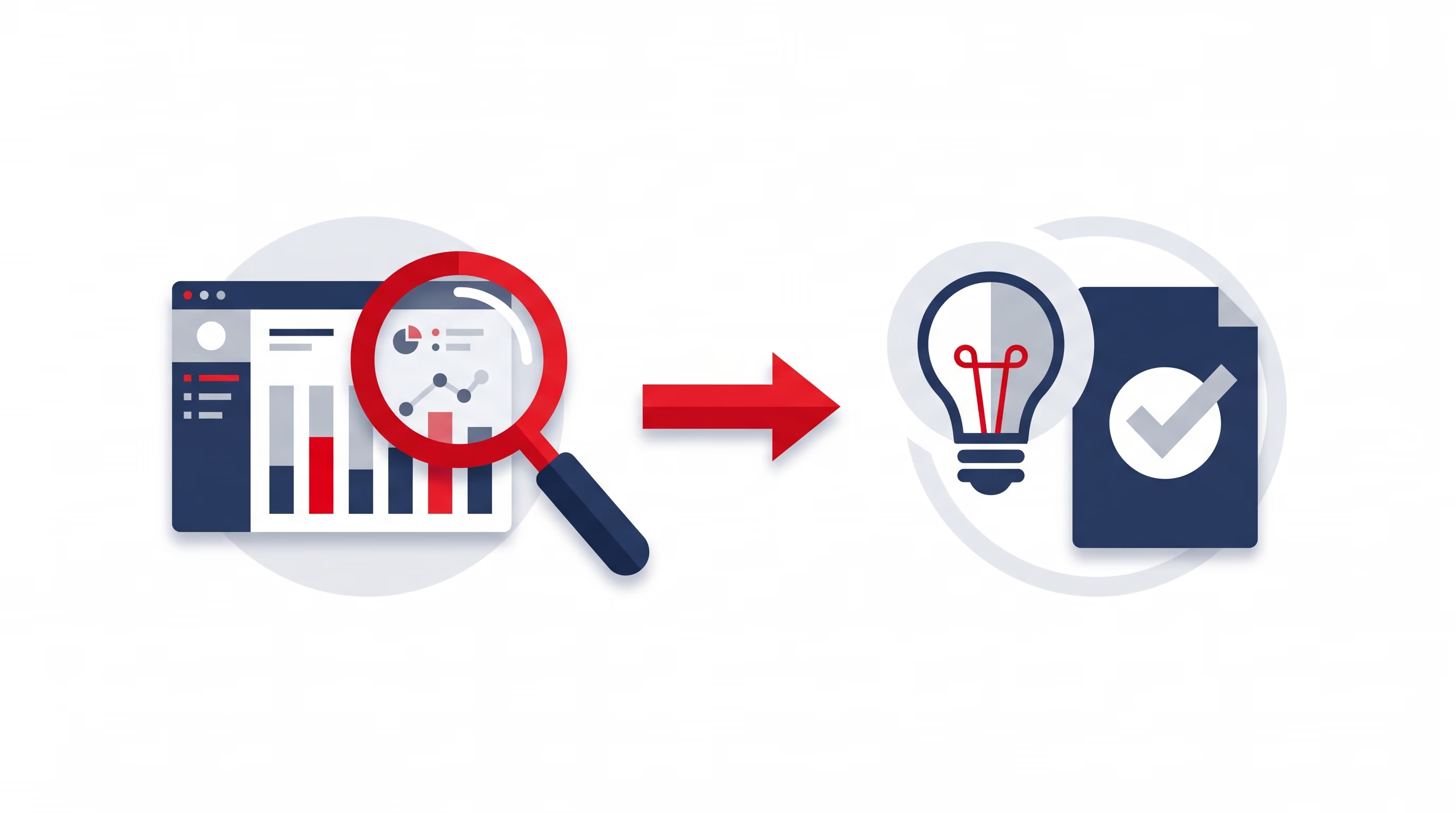
That's why our approach always starts from a different point: analyse first, propose afterwards.
The problem with those who sell solutions before understanding the problem
Many providers work from a catalogue of ready-made solutions. Their goal, understandable from a commercial point of view, is to fit your business into what they already know how to sell.
The result is predictable: you get a quick proposal, often with a competitive price, but built on generic assumptions rather than your actual situation.
A few signs of this approach are easy to spot:
- the quote arrives before any in-depth questions about your business;
- the proposed solution is very similar to the one offered to other clients, regardless of sector;
- nothing is asked about your internal processes, your customers or your growth goals;
- the language used is technical and product-oriented, not focused on the problem it's meant to solve.
This doesn't necessarily mean these solutions are wrong. It means they're chosen for you, not built around you.
What changes when you start from an analysis
A proper analysis takes time before any proposal is made. It means understanding:
- how the business works today , which tools it uses, where it loses time or efficiency;
- what the real goals are , in the short and medium term, not generic ones like "grow" or "go digital";
- what constraints exist , in terms of budget, in-house skills, and time available for change;
- what has already worked or failed in the past, and why.
Only with this information does it make sense to start assessing which tool, service or intervention is really worth proposing. In some cases, after the analysis, it turns out the right solution is simpler and cheaper than the business imagined. In other cases, the opposite emerges: the real problem is deeper than a single tool to buy.
Why we analyse first
Analysing before proposing is not just a matter of fairness; it's the condition for proposing something that actually works.
A proposal built on the wrong assumptions almost always leads to one of these scenarios:
The tool is bought, but doesn't solve the real problem, because the real problem was never precisely identified.
The project requires constant changes along the way, with costs and timelines growing beyond the initial estimates.
The business loses confidence in the digitalisation process, because the first attempt didn't work as promised.
A preliminary analysis drastically reduces these risks, because the final proposal is grounded in your business's own data.
How our process works in practice
When a Ticino business comes to us, the process never starts with a quote. It starts with a few simple but precise questions: what works today, what doesn't, what you'd like to achieve, and what real constraints you have to work within.
From there we build a clear picture of the situation, before pointing out which direction makes sense to take. In some cases the answer concerns the website, in others the digital management of internal processes, and in others still a combination of several interventions.
This is the principle behind our Smart Business Consulting service: not a fixed package to sell, but a process that starts from analysing your business and arrives at a proposal that makes sense only for you.
Why this approach pays off for a Ticino business
Ticino SMEs often operate with limited resources and time. A wrong decision, such as investing in the wrong tool or a poorly calibrated project, weighs proportionally more heavily than it would on a larger company.
For this reason, the time spent on an initial analysis protects the investment. It reduces the likelihood of having to redo a project, change provider, or realise too late that the chosen solution wasn't the right one.
Be wary of anyone who already has the answer before knowing the question
If a provider proposes a solution before even understanding how your business works, it's worth asking what that proposal is really based on.
A serious digital partner starts from the facts of your business. The difference is rarely visible in the initial quote, but is almost always visible in the results obtained a few months later.
Request a free analysis of your business
If you're considering a digital project, a new website or a reorganisation of your internal processes, before asking for a price it's worth having your situation looked at by someone who knows how to spot where the problem lies.
Request a free analysis: we assess your current situation and clearly show you where it makes sense to act, before talking about any solution.