Smart Office: technology for the office of the future
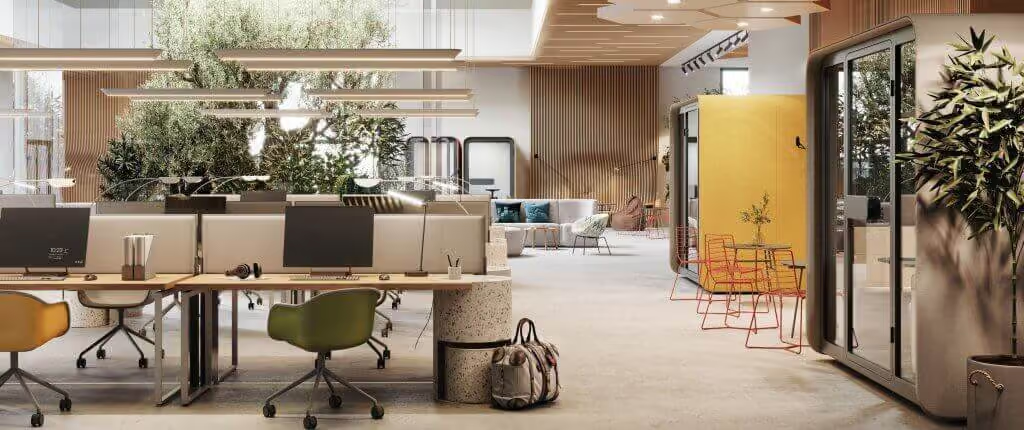
In recent years, the concept of the office has changed radically. Besides being a physical space, it's now a set of digital tools designed to help people work better together and consume less. This is where the Smart Office comes in, a model increasingly adopted by Swiss SMEs too.
The Smart Office brings together digital technologies, automation and collaborative tools to create flexible, intelligent, people-oriented work environments. It responds to hybrid working, the need to cut costs and growing attention to employee well-being.
What a Smart Office is and why it matters in 2026
A Smart Office is an office that uses interconnected digital technologies to optimise:
- the use of space
- resource management
- collaboration between teams
- energy consumption
- the overall employee experience
In Switzerland, where space and energy costs are high, adopting a Smart Office model lets companies:
- reduce waste
- increase productivity
- make the company more attractive to talent
Smart meeting room management
One of the most common problems in traditional offices is inefficient meeting room management: rooms booked but empty, scheduling conflicts, wasted time.
Thanks to digital tools for the Smart Office, it's possible to:
- book meeting rooms online
- see availability in real time
- integrate calendars (Outlook, Google Calendar, Microsoft 365)
- avoid double bookings
Some advanced systems can even:
- automatically release a room if no one shows up
- analyse actual space usage
This translates into less waste and more efficiency.
Desk booking systems
With hybrid working increasingly common, many companies no longer have a fixed desk for every employee. Desk sharing systems let you:
- book a workstation in the office
- choose the type of space (desk, focus room, open space)
- plan weekly attendance
The benefits are clear:
- less unused space
- better organisation
- greater flexibility for employees
For Swiss SMEs, this means cutting property costs without sacrificing the quality of work.
Digital collaboration and hybrid working
A Smart Office doesn't work without digital collaboration tools. The most widely used technologies include:
- Microsoft Teams, Google Workspace, Slack
- cloud document sharing
- digital whiteboards
- project management tools
These tools let teams collaborate effectively regardless of physical location, keeping continuity between the office and remote working.
Energy efficiency: lower costs, less CO₂
One of the most important aspects of the Smart Office is intelligent energy management.
Through digital systems, it's possible to:
- control lighting and heating
- automatically adjust temperature and lights
- monitor consumption in real time
- switch off unused devices
This leads to:
- lower bills
- reduced environmental impact
- compliance with sustainability goals
In a Swiss context that's increasingly focused on ecology, the Smart Office also becomes a concrete tool for cutting CO₂ emissions.
Employee comfort and well-being
Technology saves money and also improves the quality of work.
A well-designed Smart Office takes into account:
- natural lighting
- acoustics
- air quality
- ergonomics of workstations
A comfortable environment reduces stress, increases focus and improves employee satisfaction. This has a direct impact on:
- productivity
- staff retention
- company image
Security and access control
Smart Office technologies also include systems for:
- digital access control
- smart badges
- differentiated access by area
- space monitoring
These tools increase physical security and help comply with data protection regulations, a central topic in Switzerland too.
easy4you's role in the Smart Office
easy4you supports Swiss SMEs in designing, advising on and implementing tailored Smart Office solutions.
Our approach includes:
- analysing business needs
- choosing the most suitable technologies
- integration with existing systems
- configuration and setup
- ongoing support
What we build are customised digital ecosystems, designed to grow with your company.
Conclusion
The Smart Office is made up of tools, but first and foremost it's a different way of organising work. Investing in smart tools today means creating offices that are more efficient, sustainable and people-oriented.
Want to turn your office into a modern, efficient Smart Office? Or do you feel something is still missing from your SME's digitalisation? Contact easy4you for a free appointment and find out how we can help you.