SMART: the guide to setting effective goals
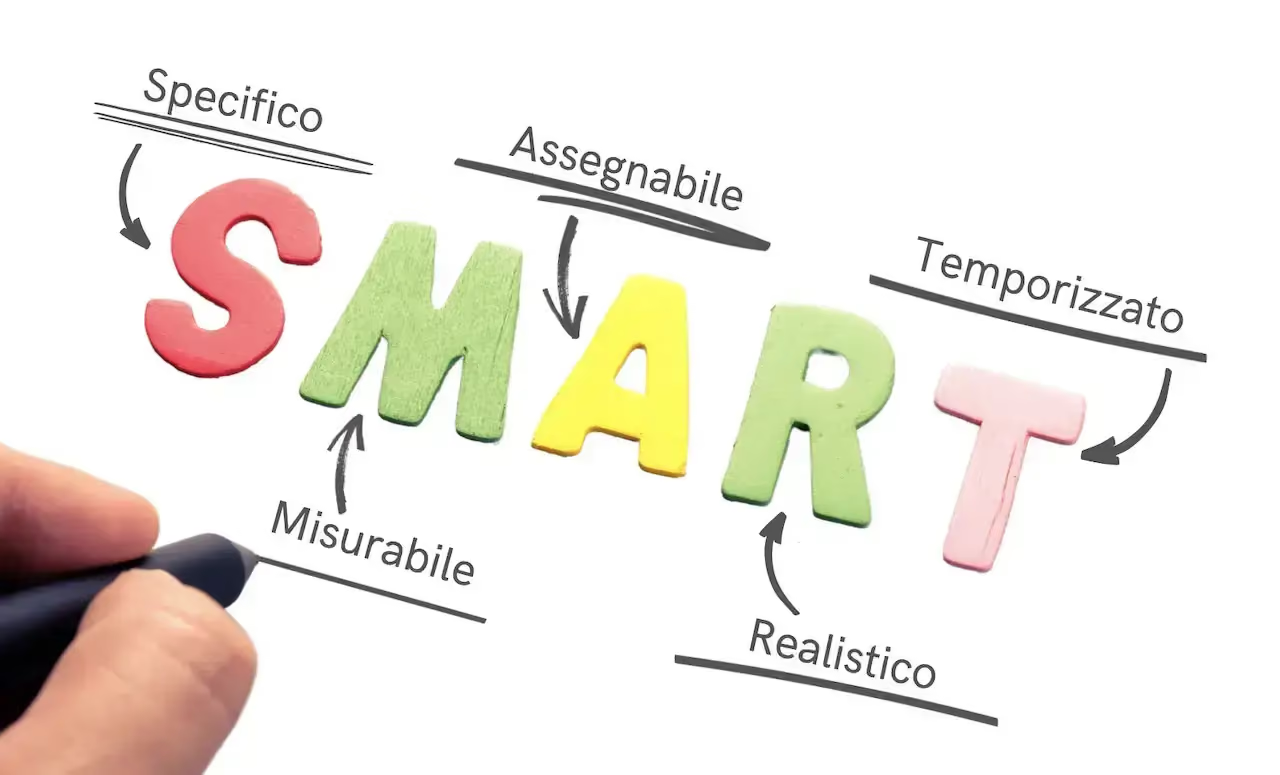
Setting clear, achievable goals is essential for the success of any business or project. Yet businesses often fail right at the goal-setting stage, making their goals too vague or unrealistic. This is where the SMART method comes in: a proven tool for setting effective, well-defined goals that make planning and achieving results easier.
What does SMART mean?
The SMART method is an acronym for Specific, Measurable, Achievable, Relevant and Time-bound. It's a tool used to set clear, well-structured goals, making it easier to understand where you stand.
1. S – Specific
The first principle of the SMART method is specificity. A vague or generic goal is hard to follow, whereas a specific goal is clear and well-defined.
- Key question: what do I want to achieve?
- Example: instead of saying "I want to increase sales", a specific goal would be "I want to increase sales by 10% over the next three months, focusing on existing customers and implementing upselling campaigns."
2. M – Measurable
A goal must be measurable so you can track progress and know when it's been reached. Setting numerical parameters or clear criteria is essential for assessing progress and results.
- Key question: how can I measure progress?
- Example: a measurable goal could be "Increase the number of leads generated by the website from 100 to 150 by the end of the quarter."
3. A – Achievable
A SMART goal must be achievable. It's important to set realistic targets that are also challenging. A goal that's too ambitious can be demotivating, while one that's too easy might not encourage improvement.
- Key question: is it realistic, given the resources available?
- Example: "Double sales in a week" might not be realistic, while "Increase sales by 5% within the month" is more achievable and still challenging.
4. R – Relevant
A SMART goal must be relevant, meaning aligned with business priorities and capable of generating value. A relevant goal is one that answers questions like "Why does this goal matter? Will it contribute to overall success?"
- Key question: is this a goal worth pursuing for my business or team?
- Example: if the business goal is to expand into new regions, focusing on improvements to internal management might not be equally relevant.
5. T – Time-bound
Every goal must have a clearly defined deadline or timeframe. Goals without a timeframe tend to be put off or neglected. Setting a time horizon helps maintain focus and motivation.
- Key question: by when do I want to reach this goal?
- Example: a time-bound goal could be "Launch the new marketing campaign by 1 November."
How to apply the SMART method in a business
Applying the SMART method isn't limited to business projects or strategic plans. It can be applied across different areas of your business, from sales to HR, from production to logistics.
Examples of SMART goals in business:
Increasing team productivity:
- Vague goal: "I want the team to be more productive."
- SMART goal: "Increase team productivity by 20% by cutting unnecessary meetings and implementing project management tools within the next six months."
Improving customer satisfaction:
- Vague goal: "We want our customers to be more satisfied."
- SMART goal: "Increase customer satisfaction scores by 15% over the next three months, by improving customer service response times and implementing a new feedback system."
Reducing operating costs:
- Vague goal: "Reduce business costs."
- SMART goal: "Reduce operating costs by 10% by the end of the year, by improving procurement efficiency and negotiating better terms with suppliers."
Why does the SMART method work?
The SMART method works because it helps turn vague wishes into tangible goals. Businesses often set targets that are too generic, making it hard to measure progress or know whether you're getting closer to the desired result. Using the SMART method, you can clearly see the final goal and the steps needed to reach it.
The main benefits of the SMART method:
- Clarity: goals are well-defined, with no ambiguity.
- Measurability: progress can be tracked and success assessed.
- Motivation: knowing exactly what needs to be done, and when, makes it easier to stay motivated.
- Focus: SMART goals keep the business focused on its main priorities, avoiding wasted energy on less relevant goals.
Conclusion
The SMART method is an effective tool for turning vague, generic goals into clear, measurable and achievable targets. Whether it's about improving productivity, increasing sales or optimising business processes, the SMART approach offers a clear path to success.
By using this method, you can track the progress of your projects and give your employees clear goals. Set SMART goals and you'll see a tangible impact on your personal and professional growth.