E-commerce conversions: how to increase them
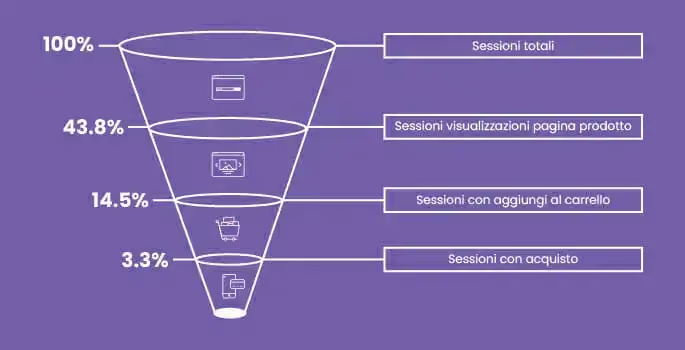
Conversions are one of the most important indicators of success for an e-commerce business in Switzerland, a competitive market but one full of opportunities. Having an online shop is the starting point: the real work is turning visitors into customers and taking care of every step of the shop.
But what exactly counts as a conversion? Besides selling a product, actions such as signing up for a newsletter, downloading a catalogue or adding an item to the cart all count. Every step that brings the user closer to a purchase contributes to the growth of your e-commerce.
Here you'll find the strategies that work best for a Swiss e-commerce business, with practical tips and tools suited to WooCommerce, Shopify, PrestaShop and Magento.
Optimising the user experience (UX) to increase conversions
A clear, fast and easy-to-use site is the first step towards reducing drop-offs. Some fundamental aspects:
- Loading speed: in Switzerland many users browse from mobile, so a slow site discourages purchases.
- Intuitive navigation: well-organised categories and advanced search filters help people find products straight away.
- Mobile first: over 60% of online purchases are made from smartphones, so the design has to be optimised accordingly.
Trust and transparency
Swiss users pay close attention to security and detail. To increase trust:
- Clearly show impressum details, company information and contacts.
- Offer local payment methods (TWINT, invoice, PostFinance, cards).
- Include genuine reviews, testimonials and certifications.
Transparency reduces doubts and increases the likelihood that the customer completes the order.
Improving the checkout
One of the main reasons for cart abandonment is a complicated payment process. Some solutions:
- Single-step checkout.
- Guest checkout with no obligation to register.
- A variety of payment methods (TWINT is now essential in Switzerland).
- Clear shipping costs shown from the start.
Incentives and psychological triggers
Even small details carry weight:
- Free shipping above a certain threshold.
- Time-limited discounts to create urgency.
- Product bundles at an attractive price.
- Loyalty programmes to reward returning customers.
Remarketing and abandoned cart recovery
Many users don't buy on their first visit, but they can be won back with:
- Automatic cart recovery emails.
- Remarketing campaigns on Google and social media.
- Push notifications for those who have opted in.
Ongoing analysis and testing
Every e-commerce business is different, so there's no single formula. You need to test:
- Different versions of product pages (A/B testing).
- Alternative photos and descriptions.
- Different checkout layouts.
Monitoring data with tools such as Google Analytics 4, Hotjar or plugins specific to WooCommerce, Shopify and PrestaShop helps you understand what works best.
Monitoring conversions: KPIs to keep track of
To increase conversions it's essential to monitor the right data. Besides the conversion rate, it's important to analyse indicators such as:
- average order value
- cart abandonment rate
- time spent on the site.
These KPIs help identify the critical points in the purchase journey and make data-driven decisions.
Fast support and assistance
Another aspect that Swiss customers value highly is being able to get a quick response:
- Live chat on the site.
- Clear, up-to-date FAQs.
- Support in several languages (Italian, German, French).
This reduces doubts and guides the customer through to the purchase.
Conclusion
To increase conversions for a Swiss e-commerce business, what matters most is a smooth, secure shopping experience.
Technical optimisation, trust, transparency and targeted strategies such as remarketing or abandoned cart recovery are the levers that move sales.
With easy4you you get full support to analyse your e-commerce business, implement improvements and choose the tools best suited to your platform (WooCommerce, Shopify, PrestaShop or Magento).
Want to increase sales for your online shop? and find out how to turn your visitors into satisfied customers.